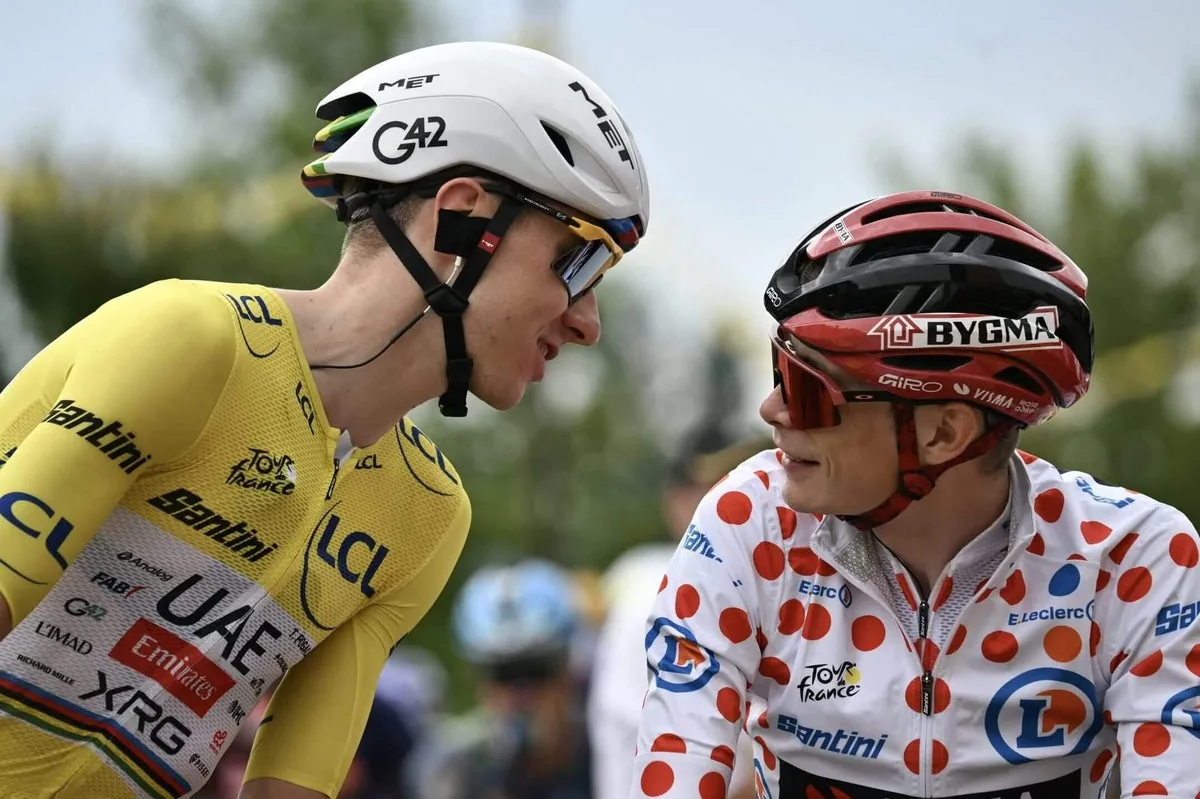
Night-time Testing Controversy
A Paris judge recently authorised night-time doping tests for Tour de France leader Tadej Pogacar and his closest rival, Jonas Vingegaard. These tests occurred in the early hours of Sunday morning, between July 18 and 19, before stage 15 of the race. The International Testing Agency (ITA) had petitioned the Paris judge specialising in liberty and detention matters to approve these anti-doping controls, which took place outside the usual 6 a.m. to 11 p.m. window.
Jonas Vingegaard was tested at 2 a.m. on Sunday, while Tadej Pogacar received an unexpected wake-up call at 5 a.m. The timing of these tests drew criticism from riders and team staff. Remco Evenepoel, currently second overall in the Tour, described the tests as “inhuman” and “disrespectful.” Matteo Jorgenson, a teammate of Vingegaard, also voiced strong disapproval, stating it showed “a complete lack of respect” towards the riders.
Pogacar commented on Vingegaard’s 2 a.m. test, calling it “inhuman” and suggesting it could have negatively impacted his rival’s sleep. He also speculated that disrupted sleep might have contributed to Vingegaard’s subsequent crash on Sunday, which resulted in a broken collarbone and forced him to withdraw from the Tour. Vingegaard himself acknowledged the importance of testing but noted that when it affects performance and sleep, it is not ideal. He mentioned that it took about 40 minutes for him to return to his room after the test, making it “not the best night.”
Impact on Riders and Race
The crash involving Jonas Vingegaard occurred when his front wheel slid out on a tight right-hand bend, causing him to land on his shoulder. The incident created a chain reaction, with three other riders, including Pogacar’s teammate Isaac del Toro, catapulting over Vingegaard. Vingegaard was seen wincing in pain as he was taken by ambulance from the scene. He is scheduled to undergo surgery for his injury in the coming days.
This incident marks a challenging end to the Tour for Vingegaard, who had shown strong form leading up to the race, including dominant wins in last year’s Vuelta a Espana Grand Tour and the Giro d’Italia in May. Despite his recent successes, he had lost significant time to Pogacar on earlier stages, including the climb up the Col du Tourmalet and the gruelling stage up Le Markstein.
The ITA, which conducts these tests on behalf of the International Cycling Union (UCI), stated that it is “conscious that night-time testing may be disruptive to riders’ rest and recovery.” However, the agency also emphasized its responsibility to ensure the effectiveness of the anti-doping program and the integrity of cycling races, indicating that effective testing must, in limited and justified circumstances, occur outside standard daytime hours. Under UCI anti-doping regulations, tests between 11 p.m. and 6 a.m. require “serious and specific suspicions” of doping activities.
Rationale for Nocturnal Testing
Night-time testing was primarily introduced to combat the use of micro-dosing performance-enhancing products, a practice that offers only a brief window for detection. Jonathan Vaughters, manager of the EF-Education EasyPost team and a former teammate of Lance Armstrong, supported the nocturnal tests. Vaughters suggested that 2 a.m. testing is an effective method to prevent micro-dosing of substances like peptides (EPO, HGH) and testosterone, stating that if such tests had been conducted in 2001, many athletes would have been suspended, potentially saving the sport years of controversy.
It is now understood that up to five teams, including Pogacar’s UAE Team Emirates XRG and Vingegaard’s Visma Lease-a-bike, have been subjected to nocturnal testing during this year’s Tour. The ITA confirmed that “other teams also have been subjected to ‘night-time’ or early morning testing,” though specific numbers were not provided. The Tour is set to conclude in Paris on Sunday evening, but there is no known timeline for the publication of the results of these tests. The ITA has indicated that the outcome of these controls, like any others, would be published according to their public disclosure policy only if an apparent anti-doping rule violation is found.
Read Also
Source: theguardian.com