The focus of the sports world is on New Jersey this Sunday, as Spain and Argentina prepare to compete in the World Cup final. This match marks a significant event, being the first all-Spanish-speaking World Cup final since the inaugural tournament in 1930, when Uruguay defeated Argentina 4–2 in Montevideo.
Newspaper front pages are highlighting various aspects of the upcoming clash. One publication is calling for a second star for Spain, referencing their previous victory, while another features Argentina‘s two-time champion flag. The desire for the trophy to return to Spain is a prominent theme in the Spanish press.
Generational clash and player focus
Some publications are emphasizing the generational aspect of the final, specifically the matchup between Lamine Yamal and Lionel Messi. One Italian paper suggests that Yamal could potentially surpass Diego Maradona‘s career numbers before reaching the age of twenty. The match is being referred to as a “Finalissima” by some, adding to the anticipation.
A detail noted by one newspaper is that Spain was unable to train on Saturday due to a storm. This circumstance is open to interpretation by both sides involved in the final. Another publication chose to highlight Rodri and his 694 passes, underscoring that influence on the field is not solely about being the most visible player.
Closer to home for some, the focus is on players like Ferran Torres and Grimaldo, who could become the first Valencians to participate in a World Cup final. The sentiment across Spain, as captured by one newspaper, is a strong desire to replicate their past World Cup success.
Divided loyalties and cultural ties
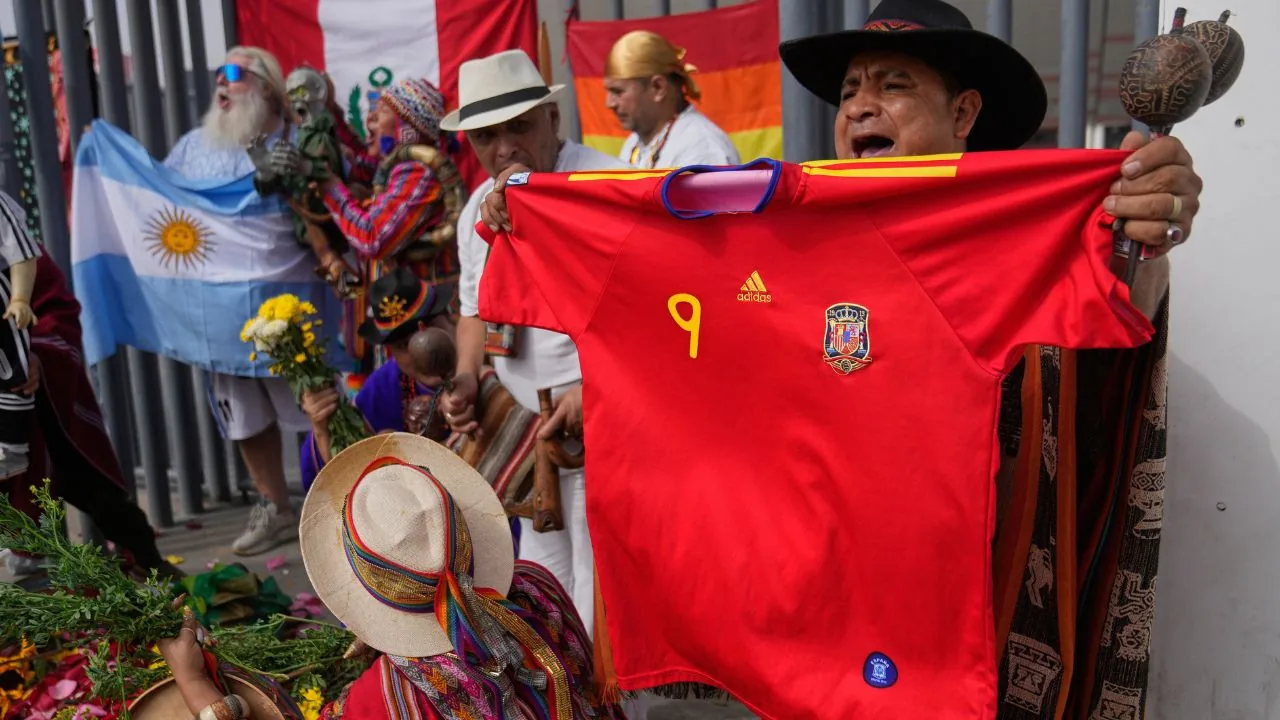
The final presents a unique situation for many Argentines and Spaniards, who share deep cultural and historical connections. This relationship, characterized by mutual admiration and blood ties, now faces a moment of divided loyalties as supporters must choose between La Furia (Spain) and La Albiceleste (Argentina).
For individuals like Juan Manuel Posada, a 75-year-old Spaniard who settled in Buenos Aires in 1968, the situation is described as being “caught between a rock and a hard place.” Despite his strong ties to Spain and his support for Sporting de Gijón, he also became a supporter of Independiente de Avellaneda in Argentina. He expressed that he would not be upset if Argentina wins, even with his heart remaining with Spain.
Manuel Fernández Acevedo, 81, who moved from Baiona to Argentina as a child, also finds himself torn. His daughter and granddaughter were born in Argentina, leading him to hope that “the best team win.”
The cultural influence of the Iberian Peninsula on Argentina is profound, stemming from the founding of Buenos Aires by the Spaniard Pedro de Mendoza in the mid-16th century and deepened by waves of Spanish migration in the first half of the 20th century. This shared heritage has enriched literature, gastronomy, and music, and has also impacted football, with figures like Alfredo Di Stéfano and Lionel Messi becoming icons for Real Madrid and Barcelona, respectively.
Despite these strong connections, a classic football rivalry between the two nations has not developed, partly because they have only faced each other once in nearly a century of World Cup history. That single encounter occurred during the group stage of the 1966 World Cup, where La Albiceleste secured a victory.
The final also holds special significance for the 450,883 people born in Argentina who were residing in Spain as of January 2025. Many of these individuals moved to Spain following economic crises in Argentina. For them, the match is a unique occasion, viewed with respect for both teams. Nahuel Barreta, 19, living in Málaga for a year, sees Argentina as just another rival but acknowledges the shared brotherhood. He plans to watch the match at a downtown bar, a common ritual for him and his friends. Social media has also reflected this familial dynamic, with posts showing Argentine-Spanish couples humorously navigating their temporary allegiances and attempting to sway their children’s support.
The French press, specifically L’Équipe, has dedicated its front page to the French team’s performance in the consolation final, overshadowing their rugby title and a Tour victory. This highlights the widespread impact and attention the World Cup final commands globally.
The match in New Jersey is set to be a memorable event, bringing together two nations with a shared past and a competitive present.
Read Also
Source: ca.sports.yahoo.com