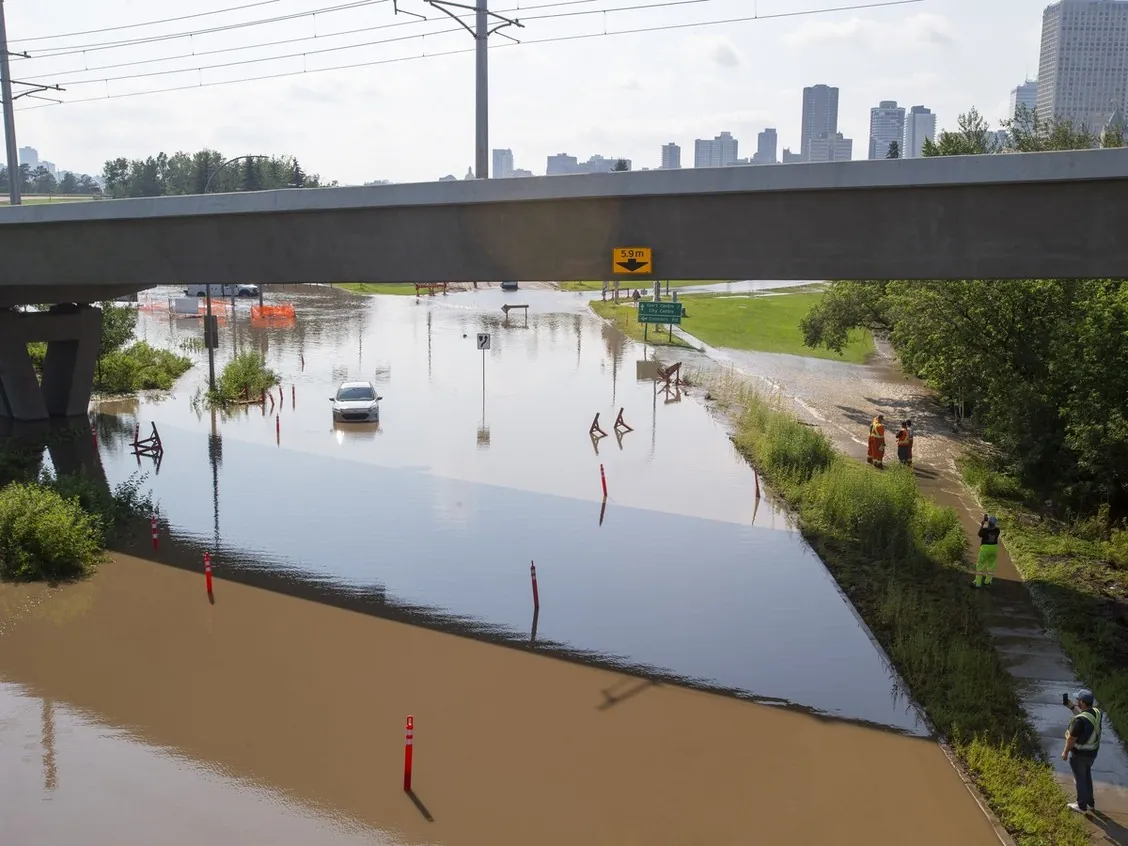
Edmonton has experienced significant flooding and road closures following a series of severe thunderstorms that brought heavy rainfall to the city. The area around Connors Road and 98 Avenue is currently closed due to flooding, according to a statement from the Edmonton Police Service. Images shared on social media show the vicinity of the Muttart Conservatory submerged under water.
The city has also announced other road closures, including 126 Avenue at 66 Street, and 129 Avenue between 58 Street and Fort Road. Motorists are advised to avoid parking in underpasses and to exercise caution, as some traffic signals may not be operational. City crews are actively working to address the issues caused by the heavy rain.
Widespread Impact Across the City
The recent storms, which occurred in two distinct waves of heavy rain, have led to widespread water issues and flooding in various parts of Edmonton. Reports indicate problems in areas such as Belgravia and Alces, as well as inside the Edmonton City Centre mall. This follows torrential rain that caused flooding and damage across the city just days prior.
The earlier storm on Saturday night resulted in temporary road closures, localized flooding, delays in transit services, downed trees, and power outages. Even before the most recent deluge, partial or full closures remained in effect from the weekend’s rainfall, including a closure at 130 Avenue and 107 Street, and a reduction to one lane on the 178 Street off-ramp to Whitemud Drive.
Beyond roads, several city facilities have also been impacted and are closed until further notice due to the rain. These closures include the Telus World of Science, the Indigenous Peoples Experiences Pavilion at Fort Edmonton Park, the aquatics area at the Grand Trunk Fitness and Leisure Centre, and the Peter Hemingway Aquatic Centre.
Record Rainfall for the Summer Season
Edmonton is currently experiencing an exceptionally wet summer, marked by persistent thunderstorms and heavy rainfall. The city has recorded an unprecedented amount of rain this season, with more than 511 millimetres between June 1 and July 26. This figure represents the highest volume recorded since 1953, significantly surpassing the typical summer rainfall amount, which usually ranges between 70 and 80 millimetres.
The total rainfall for this period alone exceeds the previous wettest summer on record, when 417 millimetres fell in 1953. With the climatological summer continuing through August 31, this record-breaking total is expected to increase further. The city has also seen more than 30 millimetres of rain on seven separate days since the start of the summer season.
The amount of rainfall in Edmonton this summer significantly surpasses that of other major Canadian cities. For instance, Calgary has received 121 millimetres of rain since June 1, which is less than its June-July average of approximately 178 millimetres. Edmonton has experienced over 400 per cent more rainfall than Calgary this summer, highlighting the localized intensity of the weather conditions.
Comparatively, Toronto-Pearson Airport has recorded only 139 millimetres this summer, and Halifax’s seasonal rainfall stands at 140 millimetres. The 511 millimetres accumulated in Edmonton through July 26 even surpasses the summer-to-date totals of some cities on the Gulf Coast known for their wet climates, such as New Orleans with 455 millimetres, Houston with 278 millimetres, and Tampa with 248 millimetres.
When heavy rain is forecast, the city collaborates with Epcor to monitor conditions and prepare for potential impacts.
Source: edmontonjournal.com