Missed Opportunity in Vancouver
The Canadian men’s team faced a significant setback in the World Cup, losing 2-1 to Switzerland in Vancouver. This result meant Canada finished second in Group B, behind Switzerland, and consequently lost the opportunity to play their next knockout matches on home soil. The team had needed only a draw in their final group stage game to secure first place and maintain their home advantage, which would have included playing a round of 32 game at BC Place on July 2.
Instead, Canada’s first-ever World Cup knockout match is scheduled to take place in Los Angeles on June 28 against the Group A runner-up. Coach Jesse Marsch expressed disappointment about not continuing the momentum in Vancouver but acknowledged the significant opportunity still ahead for the team.
The match saw a sellout crowd of 52,497 at BC Place witness Switzerland secure seven points in Group B, three more than Canada. Canada finished ahead of Bosnia and Herzegovina on goal difference. Promise David scored Canada’s lone goal after coming on as a substitute.
Tactical Decisions and Player Absences
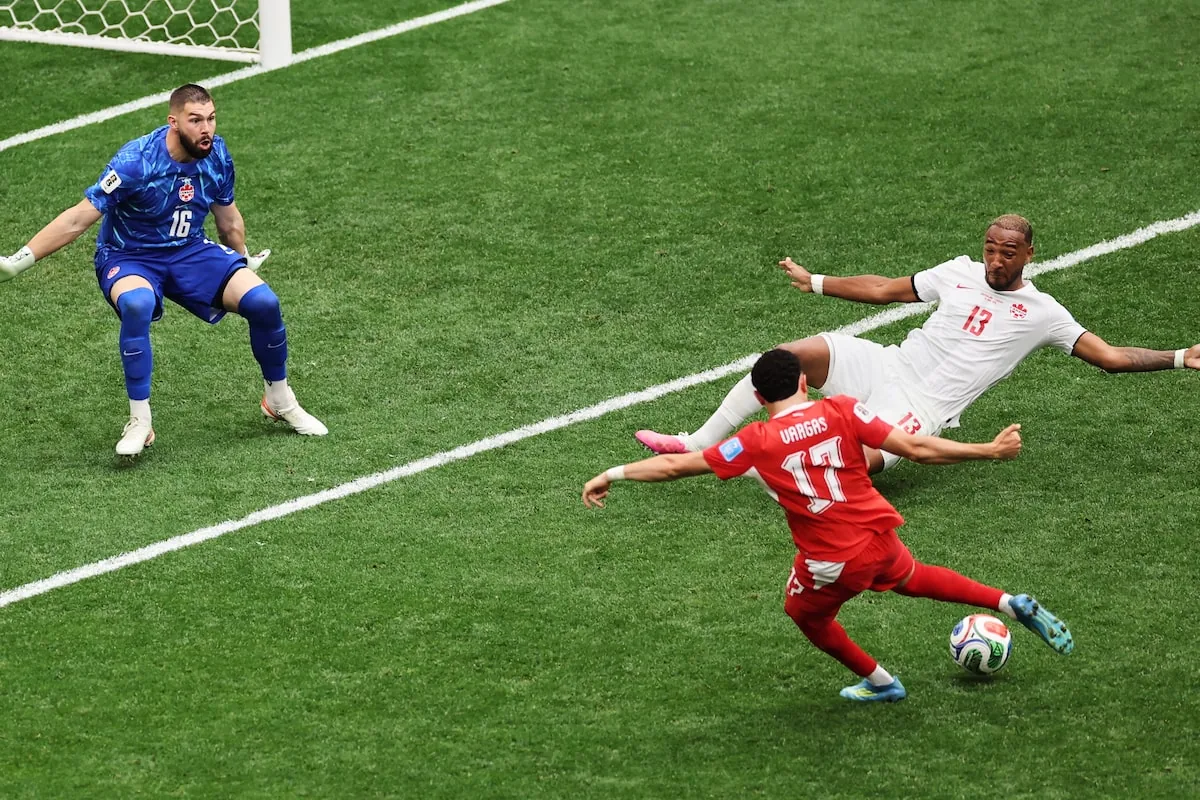
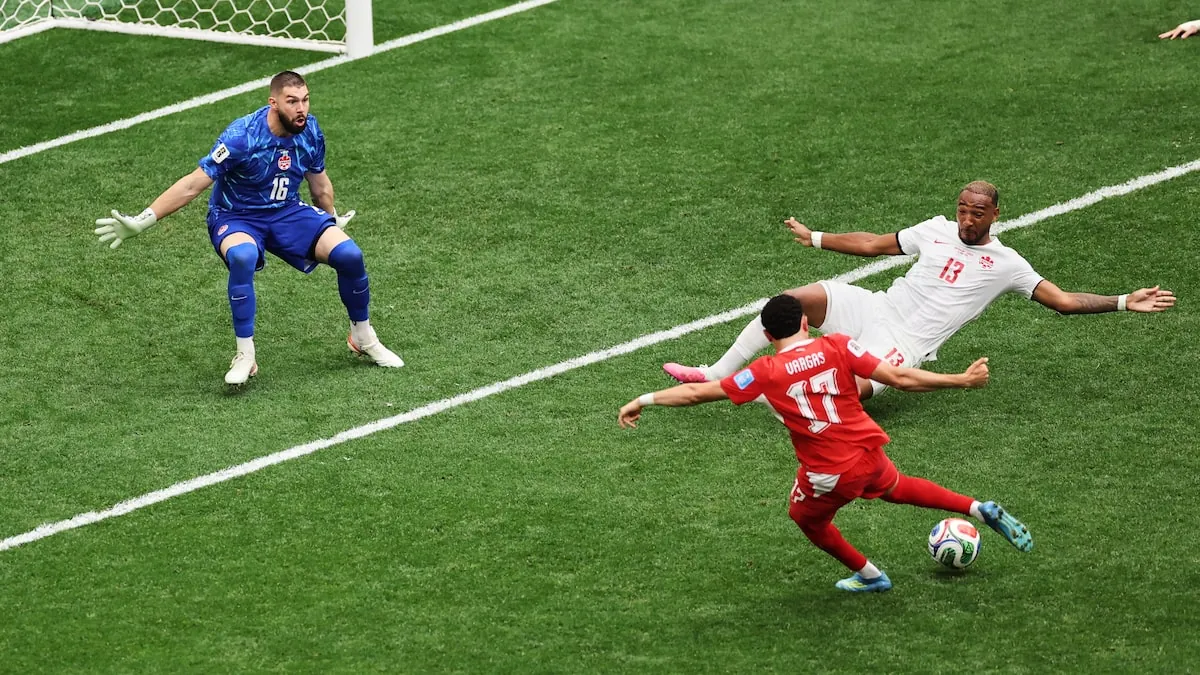
Canada’s performance was marked by a nervy start and a lack of urgency, particularly in the first half. Switzerland, in contrast, dictated the play for much of the game. The Swiss took the lead early in the second half when Rubén Vargas scored after a cross was not properly cleared by Canada’s defenders. Switzerland then doubled their lead when Johan Manzambi scored, with Breel Embolo assisting after Alistair Johnston lost his footing.
Coach Marsch made two changes to the starting lineup from the previous 6-0 win against Qatar, opting for a new central midfield pairing of Mathieu Choinière and Nathan Saliba. This decision meant co-captain Stephen Eustáquio, who was reportedly dealing with a muscle injury and felt he was not ready to start, did not feature from the beginning. Ismaël Koné was also unavailable for the rest of the tournament due to a broken leg, which Marsch noted weakened the team from a talent and tactical perspective.
The new midfield duo, despite having played together at CF Montreal, appeared tentative and struggled to establish control, allowing Switzerland’s playmaker Granit Xhaka considerable space. Choinière was substituted after 58 minutes, replaced by Eustáquio, whose experience was evident upon his entry. Marsch commented that Eustáquio’s understanding of the moment was elevated due to his prior experiences.
Another notable decision involved star player Alphonso Davies, who was an unused substitute for the second consecutive match. Marsch later revealed that Davies was never intended to play against Switzerland and was used as a decoy to influence the Swiss strategy. Marsch stated that Davies would be ready for Canada’s next game.
Late Rally and Future Prospects
Canada only showed significant urgency after falling behind by two goals. Following Switzerland’s second goal in the 57th minute, Marsch made a triple substitution, introducing Eustáquio, winger Liam Millar, and forward Tani Oluwaseyi. Promise David then entered the game in the 75th minute for Tajon Buchanan and scored Canada’s only goal in the 76th minute, moments after his introduction.
Despite the late surge, which saw Switzerland on the back foot for the remainder of the match, Canada could not find an equalizer. Marsch expressed disappointment with the team’s passive start to both halves, suggesting that a more aggressive approach from the outset might have altered the outcome. He also noted that players might become more reserved in momentous occasions rather than embracing the challenge.
The team now faces the challenge of playing their knockout match in Los Angeles against South Korea, where they will be considered underdogs. Should they advance, they would likely face the Netherlands. The focus for Canada will be to demonstrate that their earlier strong performances were not an anomaly and to avoid being outmaneuvered again, especially by their own strategic choices.
Read Also
Source: sportsnet.ca