Contentious calls and new rules
The current World Cup has seen several game-changing moments influenced by video assistant referee (VAR) technology and newly implemented rules. These decisions have led to significant debate and frustration among teams and coaches.
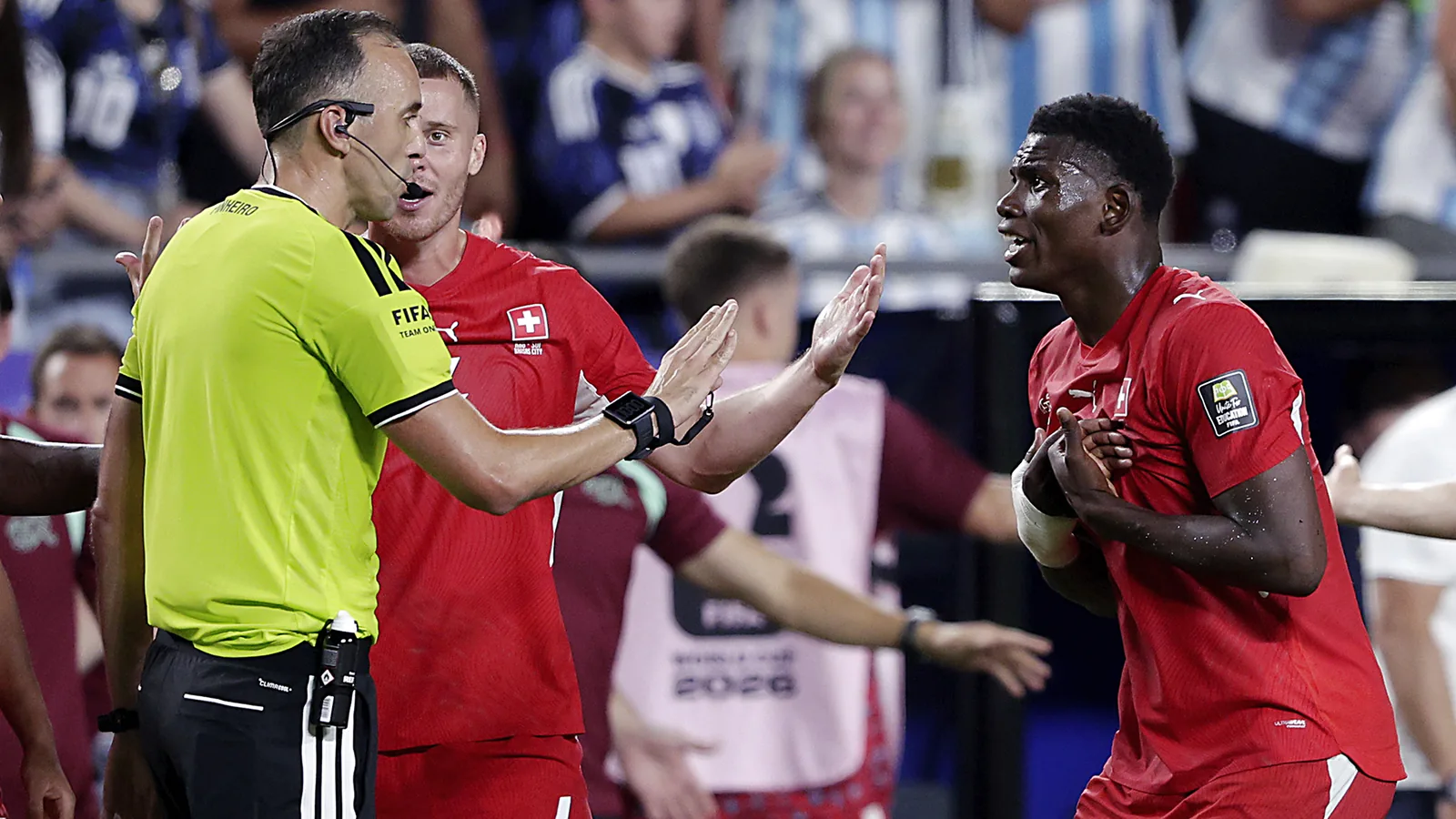
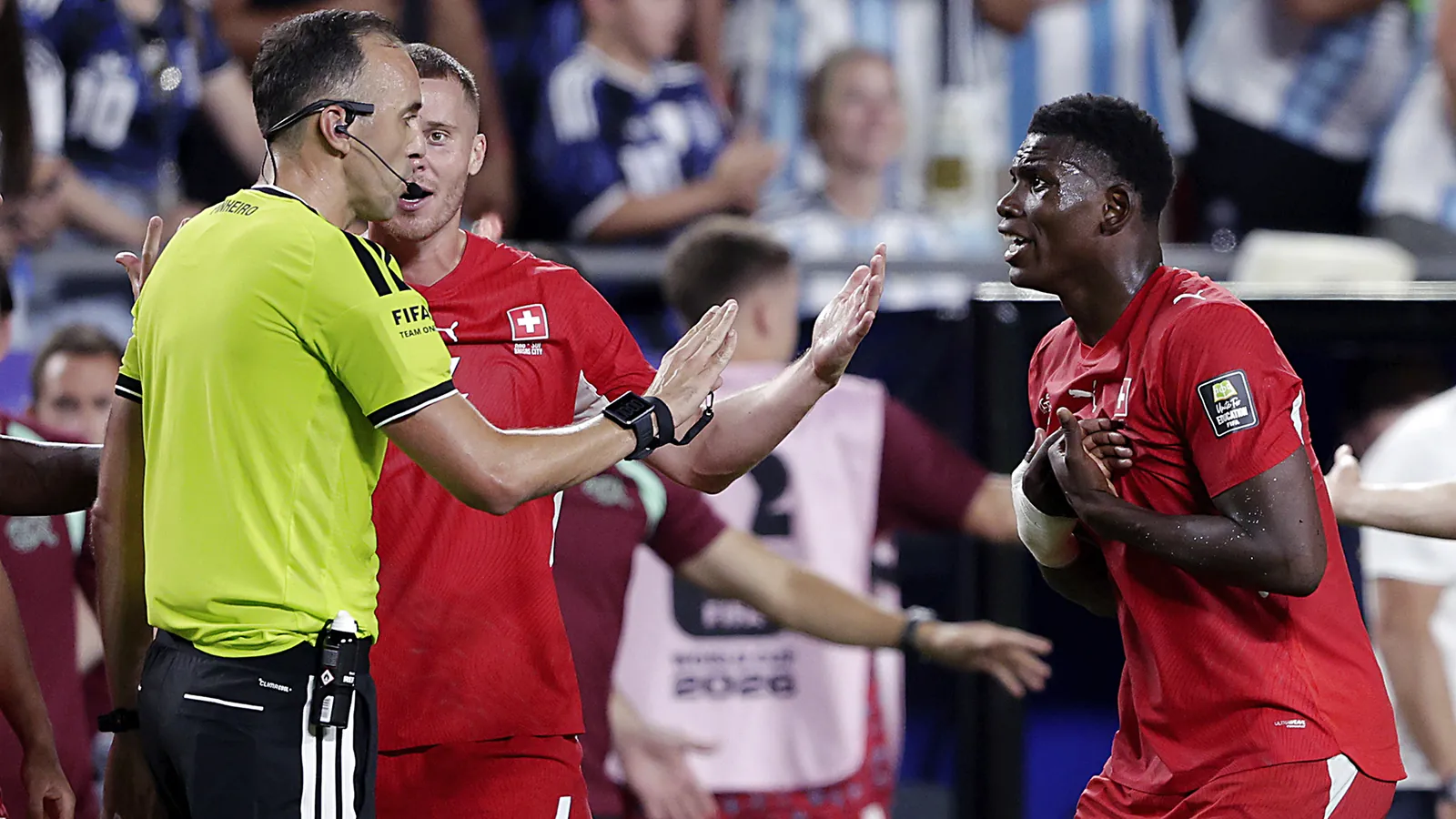
One such instance occurred during the quarter-final match between Switzerland and Argentina. The incident involved Argentina‘s Leandro Paredes, who was initially shown a yellow card. The VAR intervened, recommending a review of the sideline monitor. The referee then determined that Embolo had committed a “clear simulation,” leading to his second yellow card and expulsion. This decision came five minutes after Switzerland had equalized the score at 1-1. Argentina ultimately won the match 3-1 after extra time.
Switzerland coach Murat Yakin expressed strong disapproval of the decision, stating that the rule “destroyed our game today.” He added that being eliminated in such a manner was very painful. The rule in question, referred to as “mistaken identity,” technically allows VAR to assist when the referee penalizes the wrong team for an offence resulting in a red or yellow card shown to the wrong player.
This was not the first time new rules or technology have drawn criticism in the tournament.
Impact on other teams
Germany experienced a controversial elimination in the round of 32. Defender Jonathan Tah‘s goal against Paraguay in extra time was disallowed after a VAR review for a foul on goalkeeper Orlando Gill. Replays showed Germany‘s Waldemar Anton pushing Gill, but the minimal contact led to criticism. FIFA‘s referees chief, Pierluigi Collina, indicated that officials were instructed to penalize incidents where players attempt to block opponents without trying to play the ball, particularly concerning goalkeepers. Germany went on to lose the game in a penalty shootout.
Croatia also faced a setback due to technology. The high-tech ball, equipped with advanced sensors, played a role in disallowing a late equalizer against Portugal in the round of 32. Josko Gvardiol‘s goal was ruled offside after VAR detected a slight touch from Croatia‘s Igor Mantanovic during the buildup, a contact undetectable to the naked eye or standard video replays. FIFA stated that the in-ball sensors capture data 500 times per second, providing an unprecedented level of detail for officials. Former Croatia coach Zlatko Dalić commented that such decisions “take the joy out of football.”
Egypt‘s match against Argentina in the round of 16 also featured a contentious VAR decision. With Egypt leading 1-0, a goal by Mostafa Zico was disallowed after a video review confirmed a foul on Argentina‘s Lisandro Martinez earlier in the play. Argentina eventually won 3-2. The Egyptian soccer federation raised concerns about the consistency and fairness of decisions. Collina defended the officials, stating there was “no defined limit regarding either the distance from goal or the amount of time between the incident and the goal.”
Norway also encountered issues with technology during their quarter-final match against England, which England won 2-1. Norway‘s players and staff believed the ball hit an overhead camera cable before Jude Bellingham‘s equalizing goal. However, FIFA maintained that the ball’s sensor showed no contact with the wire. Additionally, Norway had a goal disallowed when VAR spotted a foul by Erling Haaland on England‘s Elliot Anderson before a corner kick, under new rules designed to limit fouls during corner routines. Argentina secured their spot in the semi-finals with a 3-1 victory over Switzerland.

The winning goal against Switzerland came in the 112th minute from Julián Alvarez, as penalties loomed. Lautaro Martínez scored a third goal, making the final score 3-1.
Despite the controversies, Argentina advanced to its second consecutive semi-final.
Read Also
- Atlanta to host England and Argentina World Cup semi-final clash
- Blue Jays manager John Schneider selects Dylan Cease for All-Star start over Cam Schlittler
- Toronto Tempo defeats New York Liberty in game marked by shoe-throwing ejection
- Toronto Blue Jays fall to San Diego Padres before all-star break
Source: tsn.ca