
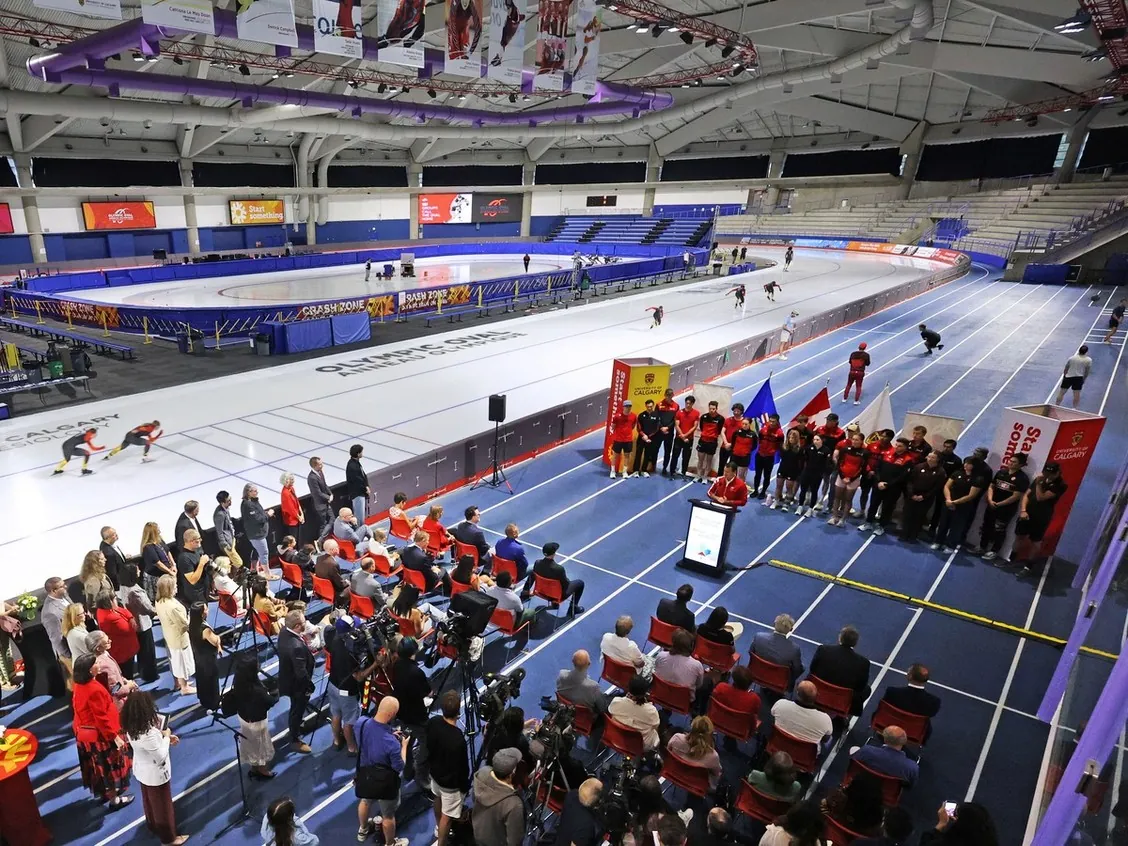
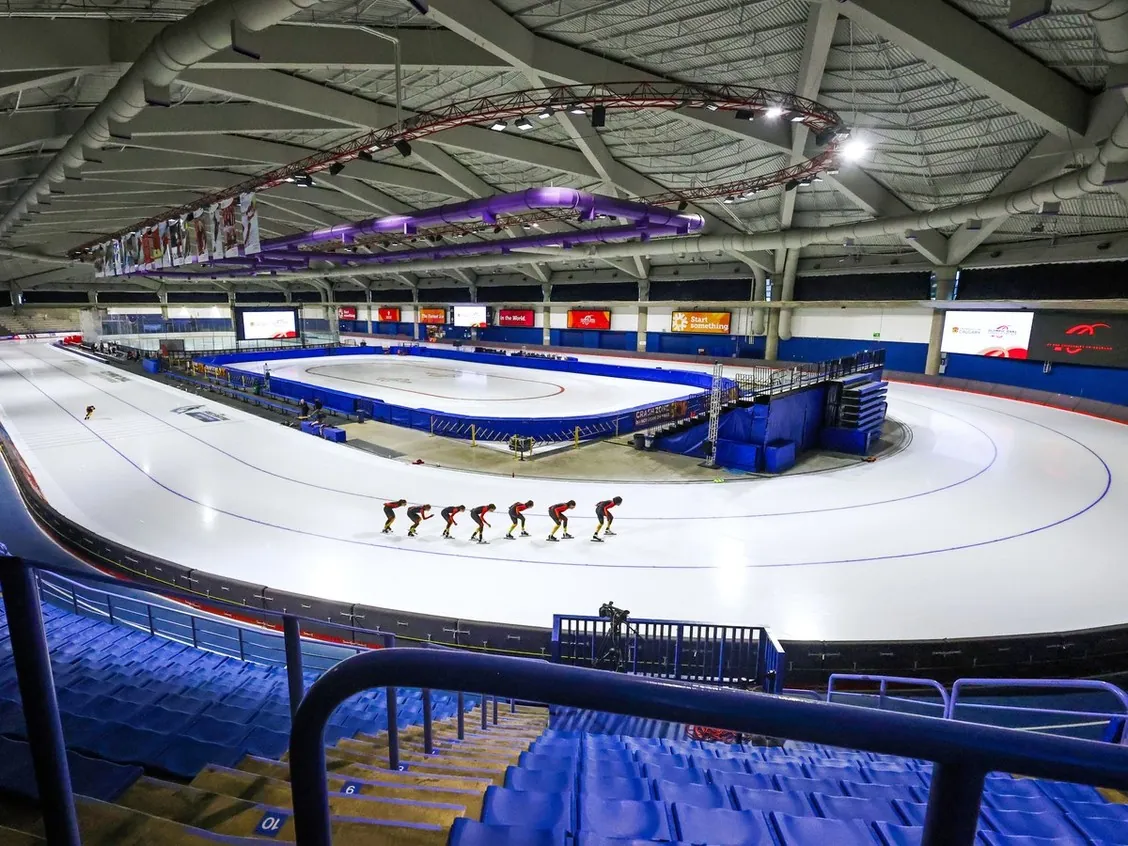
The Olympic Oval in Calgary is set to undergo significant upgrades following an announcement of funding from government officials. The facility, known for its “fastest ice in the world,” is a legacy of the 1988 Winter Olympics and a key venue for speedskating.
Officials announced a financial boost to support renovations, which will include replacing the original refrigerated concrete slab that underpins the 400-metre skating oval and its two ice rinks. Additionally, a new ice plant will be installed, and essential mechanical, electrical, structural, and life-safety systems will be upgraded.
Adam van Koeverden, federal Secretary of State for Sport, stated that the investment aims to ensure the long-term operation and accessibility of the facility. He highlighted the Oval’s role as home to many Olympic medallists and numerous world records.
Addressing an aging facility
The funding provides a crucial lifeline for the aging facility. Concerns were raised in 2025 by Canadian speedskaters regarding the Oval’s ability to produce ice, citing an increasing number of brine leaks among the pipe connections beneath its surface.
Mark Messer, the Oval’s director, indicated that some work will commence immediately, with a substantial portion scheduled for next summer when the ice is not in use. Messer noted that the upgrades will necessitate a nine-month shutdown of the Oval, beginning in January 2028.
The renewal project is expected to extend the Oval’s lifespan by 30 years. Messer expressed optimism about the facility’s future, despite acknowledging that additional funding may still be required.
Impact on athletes and other facilities
The Olympic Oval, situated on the University of Calgary campus, opened in September 1987. In the decades since, it has become a training base for several Canadian national speedskaters and a centre of excellence for the International Skating Union.
The facility has contributed to the success of 26 Olympic medallists, who have collectively earned 40 Olympic medals, including 12 gold medals for Team Canada. Notable alumni include Catriona Le May Doan, Cindy Klassen, Clara Hughes, and Christine Nesbitt.
Isabelle Weidemann, a four-time Olympic medallist, shared her personal connection to the Oval, recalling how it drew her to Calgary as a 15-year-old with Olympic aspirations. She emphasized the unique atmosphere of the facility that inspired her to train there.
Beyond the Olympic Oval, other 1988 Olympic legacy amenities are also receiving federal funding. This includes support for increasing snow-making capacity and updating security at the Nakiska National Ski Cross Training Centre, as well as improvements to the ski and snowboard half-pipe and slopestyle course at Calgary’s WinSport at Canada Olympic Park.
The federal funding is part of the new Playground to Podium program, which aims to invest in Canadian sport over the next five years. Van Koeverden described this as a significant investment in the nation’s history, intended to upgrade sports facilities, support athlete development, and increase participation.
Additionally, an increase to the Athletics Assistance Program was announced, which will raise the average monthly stipend for Canada’s Olympic athletes to $2,300 per month. This subsidy is designed to help Olympic-track athletes concentrate on their training.
These announcements were made during a series of events in Alberta, including a press conference on Monday, July 27, 2026.
Source: calgaryherald.com