Switzerland forward Breel Embolo was sent off during his country’s World Cup quarter-final match against Argentina in Kansas City, becoming the first player to receive a red card under a new mistaken identity rule introduced for the tournament. The incident occurred in the 72nd minute of the game, which Argentina ultimately won 3-1 in extra time.
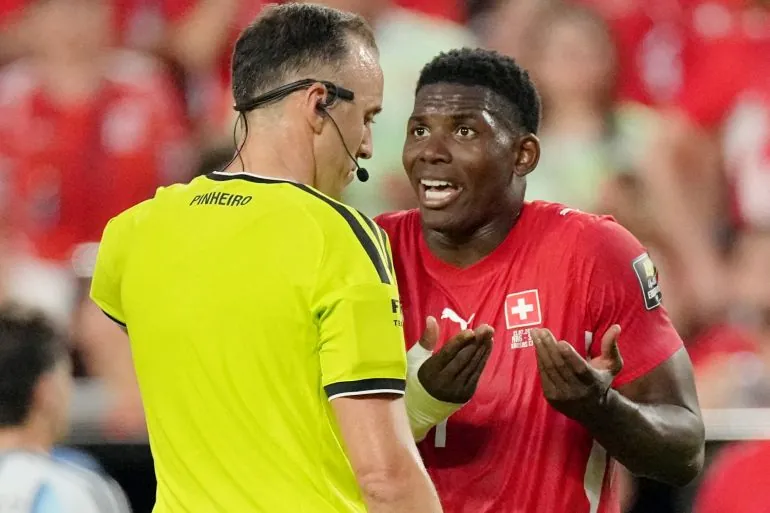
The sequence of events began when Argentina‘s Leandro Paredes was initially shown a yellow card for a foul on Embolo. However, the Video Assistant Referee (VAR) intervened, prompting referee Joao Pedro Silva Pinheiro to review the play. Upon review, the official determined that Embolo had simulated a dive.
As Embolo had already received a yellow card earlier in the match, the second caution for simulation resulted in his dismissal. The decision came just five minutes after Switzerland had equalized against the defending world champions, bringing the score to 1-1.
Mistaken Identity Rule Explained
The new rule, specifically requested by Fifa‘s head of referees Pierluigi Collina, addresses situations where a player is booked or sent off, but the foul was actually committed by an opposing player, or the wrong player was penalised. The International Football Association Board (IFAB) defines mistaken identity as when a referee shows a yellow or red card but has clearly penalised the wrong player of either team for the offence.
In this instance, the VAR team, working remotely, identified the incident and called for a review. Referee Pinheiro rescinded the yellow card for Paredes and instead issued a caution to Embolo. The rules brought in for the World Cup allow for such reviews, enabling officials to correct mistaken identity errors involving players from either team.
A previous application of this law occurred earlier in the tournament when USA defender Tim Ream was initially booked for a foul, but the decision was overturned by VAR, and Miguel Almiron was instead booked for simulation.
Match Impact and Reactions
Embolo, 29, was visibly distraught as he left the pitch, being consoled by his teammates. Swiss coach Murat Yakin expressed pride in his team’s effort, stating, “This team has so much passion. Despite the fact we were one man down, we gave it all. I’m extremely proud of everyone.”
Pundits offered mixed reactions. Former Major League Soccer striker Bradley Wright-Phillips commented, “I feel for Embolo’s team-mates, I don’t feel for him. He has cost his team maybe getting through to the semi-finals.” Former Jamaica international Jobi McAnuff added, “Breel Embolo let himself down, he let his team-mates down. Everything looks worse in slow motion and he ends up getting the yellow card for simulation. Maybe he felt the contact was going to come sooner and it didn’t. It was simulation but you can’t help but feel sorry for him.”
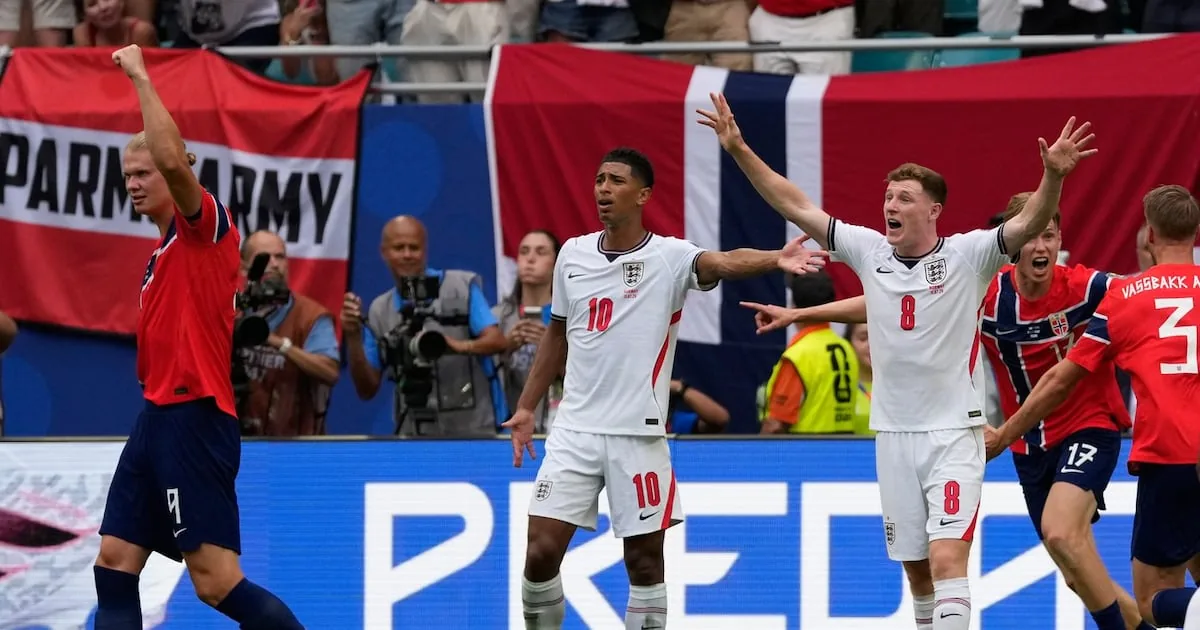
Before Embolo’s dismissal, the match was evenly poised. Despite holding the score at 1-1 until the end of normal time, Switzerland ultimately conceded two goals in extra time, leading to their elimination from the tournament. Argentina will now face England in the semi-finals.
The incident highlighted the impact of the new VAR rules on critical match decisions. The ability to review and correct mistaken identity in real-time proved significant in the quarter-final outcome.
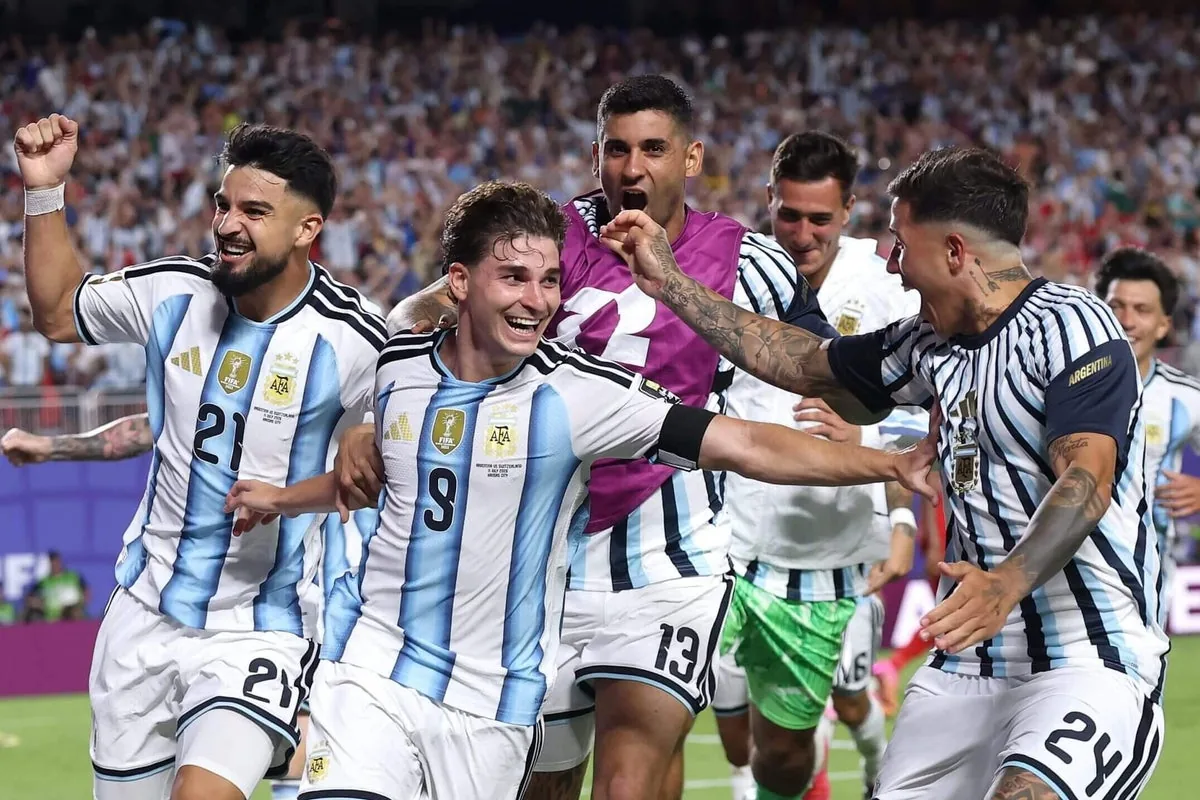
Argentina‘s victory was sealed by a goal from Julian Alvarez in the 112th minute, followed by a late third goal from Lautaro Martinez, ending Switzerland‘s resistance.
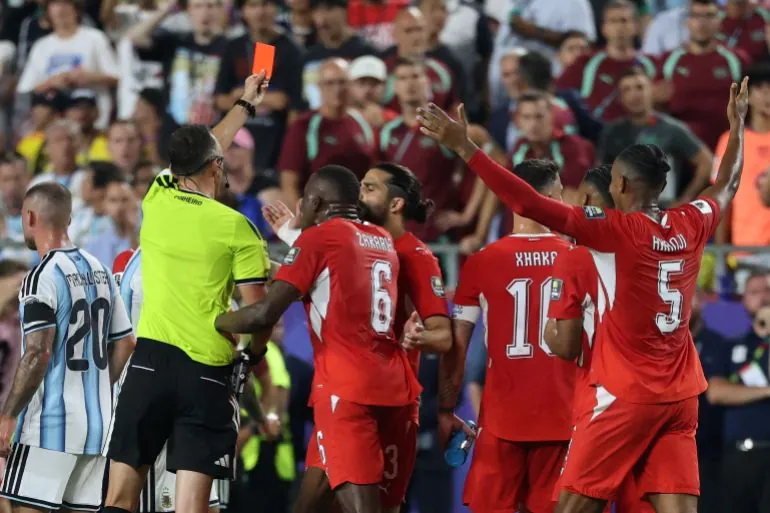
The match was a key talking point due to the unusual nature of the sending-off, which occurred moments after Dan Ndoye had cancelled out Alexis Mac Allister‘s opener for Argentina.
The decision to send off Embolo was based on footage reviewed by VAR, which indicated he had dived after a challenge from Paredes. The VAR team in Dallas played a crucial role in the review process, ensuring the correct player was penalized for the offence.
The rules allow for the identity of the attacker to be reviewed if the referee misidentifies the player who committed the offence. This specific interpretation of the mistaken identity rule meant that the initial yellow card to Paredes could be withdrawn and a caution issued to Embolo instead.
The incident underscored the evolving role of technology in football, particularly in high-stakes matches like the World Cup quarter-finals. Argentina will now prepare for their semi-final match against England.
Read Also
Source: bbc.com